Long-term care for elderly people in Singapore can look quite different from one family to another. One senior may only need someone to help with bathing and meals. Another may need regular nursing care, help moving around, or someone nearby throughout the day. When considering long term care for elderly, it is important to look at what the person actually needs before choosing a care arrangement. CareHome Nursing can provide personalised care support based on a senior’s daily routine, level of independence and changing care needs. This helps families choose suitable support while allowing seniors to remain safe, comfortable and cared for in familiar surroundings.
Understanding Long Term Care for Elderly People in Singapore
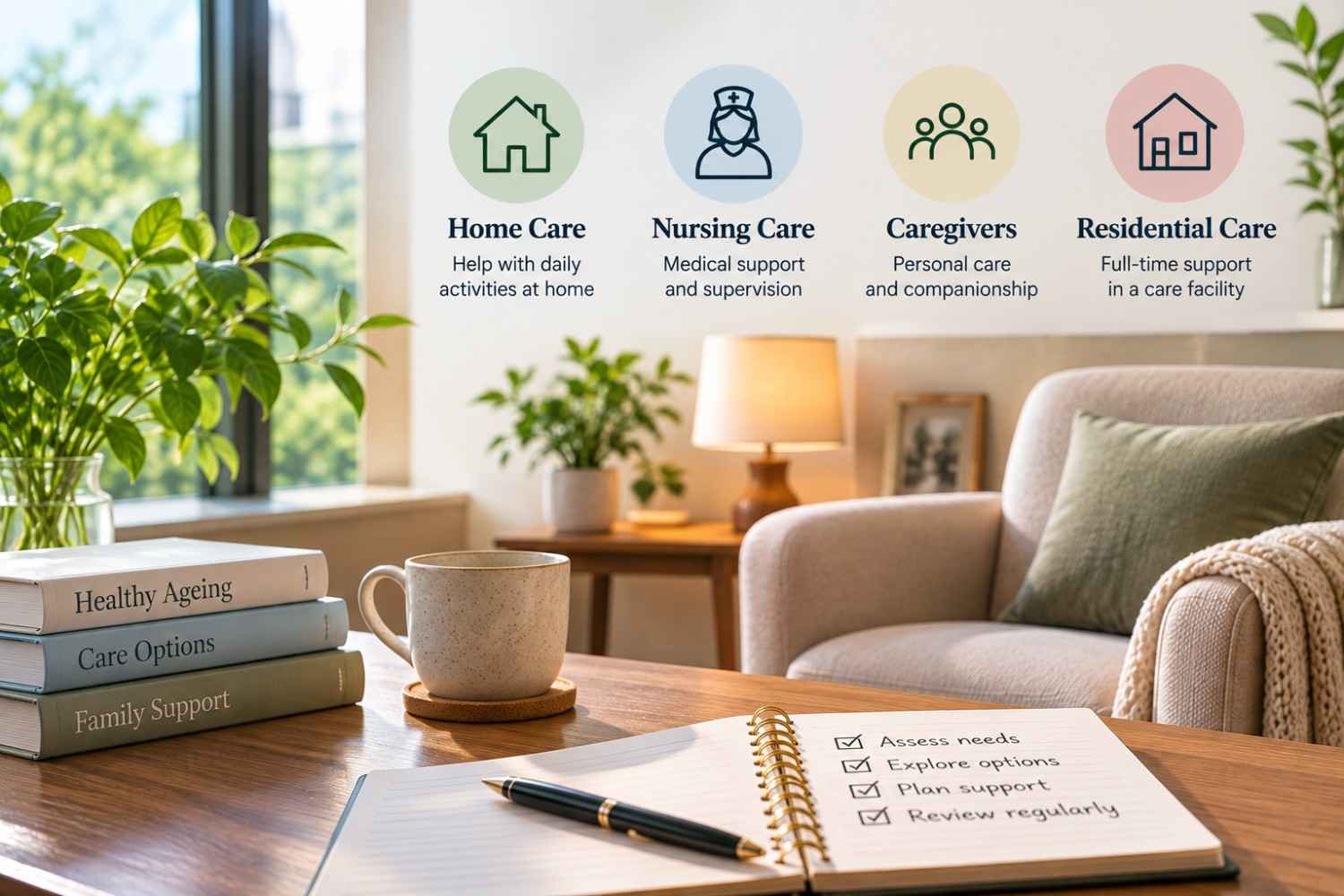
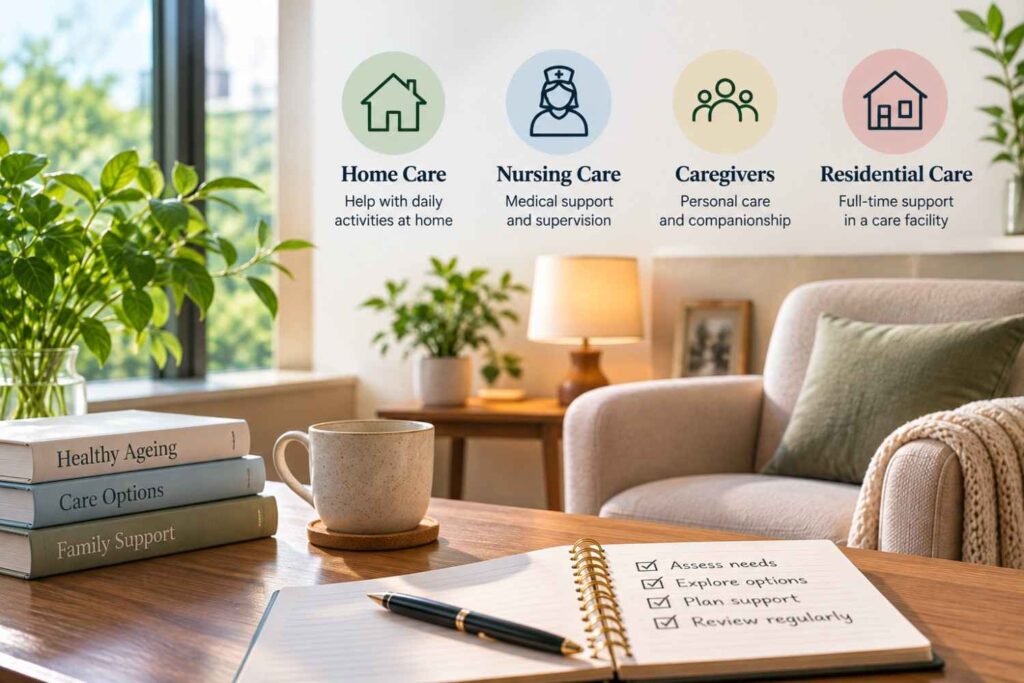
Long-term care is not just about nursing homes. There are several ways to support an older person, and home care is one of them.
Some seniors are quite comfortable staying in their own homes. They know the surroundings, have their usual routine and feel more at ease there. With the right help, they may be able to continue doing so.
Others need more support. Their health may have changed, or everyday tasks may have become difficult. In such cases, the family may need to consider nursing care or residential options.
What Does Long Term Care for Elderly People Include?
There is no single list of services that applies to every senior. Care depends on the person’s condition and what they can manage without assistance.
For example, an older person with limited mobility may need help getting out of bed, bathing and walking around the house. Someone else may need help because of a medical condition.
Care may include:
- Help with bathing and grooming
- Assistance with eating and preparing meals
- Support with walking and moving around
- Medication assistance
- Wound care
- Nursing procedures
- Companionship and supervision
The amount of help can change too. A senior who has just returned from hospital may need considerable assistance for a few weeks. As they recover, some of that support may no longer be needed.
When Does an Elderly Person Need Long-Term Care?
Age by itself does not tell you whether someone needs long-term care. Day-to-day difficulties are a much better indication.
Perhaps your parents have started falling more often. Maybe they forget their medication or cannot safely shower without someone nearby. These things can be easy to overlook when the changes happen slowly.
Families may want to consider extra support when a senior:
- Has difficulty walking safely
- Needs help getting dressed or bathing
- Cannot prepare or eat meals independently
- Frequently forgets medication
- Has memory or cognitive difficulties
- Needs regular wound or medical care
- Should not be left alone for long periods
It is also worth asking the seniors what they find difficult. Their own view can help the family decide what kind of support would actually be useful.
Long-Term Senior Care Options in Singapore
There is no single care arrangement that suits every household. Some families prefer home-based support because the senior can remain in familiar surroundings. Others may find residential care more practical when daily needs become harder to manage.
Home Nursing Services for Long-Term Elderly Care
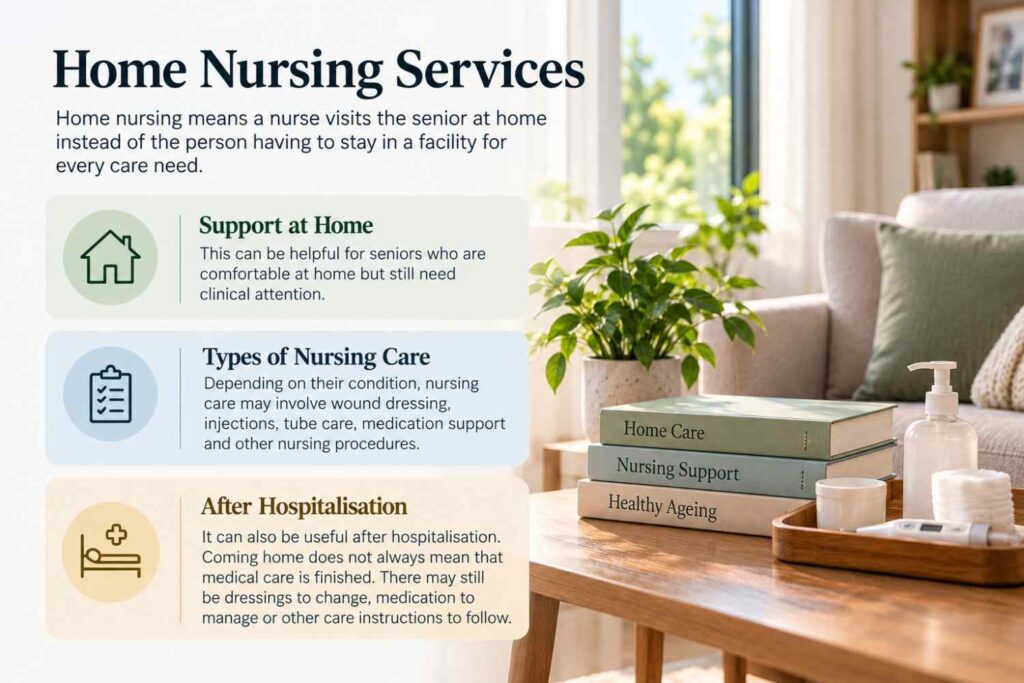
Home nursing means a nurse visits the senior at home instead of the person having to stay in a facility for every care need.
This can be helpful for seniors who are comfortable at home but still need clinical attention. Depending on their condition, nursing care may involve wound dressing, injections, tube care, medication support and other nursing procedures.
It can also be useful after hospitalisation. Coming home does not always mean that medical care is finished. There may still be dressings to change, medication to manage or other care instructions to follow.
Full-Time Caregiver for Elderly People in Singapore
A full time caregiver for elderly in Singapore can help with the less clinical side of daily care. That may mean helping someone shower, get dressed, eat, move around the house or settle into bed.
There is also the simple human side of care. Having another person around can provide company and reassurance, particularly for seniors who spend much of the day alone. CareHome Nursing can provide personalised care support to help seniors manage daily routines while giving families greater peace of mind.
Families should discuss the caregiver’s duties before the arrangement begins. Daily routines, personal care, meal preparation, mobility assistance and household responsibilities should be clear from the start. This helps ensure the care arrangement is suited to the senior’s needs and provides consistent support throughout the day.
When Is Nursing Home Care Suitable for Seniors?
A nursing home provides a place to live as well as regular care. It may be considered when a senior cannot safely manage at home or needs more consistent supervision than the family can provide.
Residents can receive help with daily activities and nursing needs. For some households, this is a practical option when caring for an older relative at home has become too difficult.
That does not mean a nursing home is the right choice for everyone. The senior’s health, preferences and level of independence should all be considered.
How to Choose the Right Long-Term Care Arrangement
Choosing care is not simply a matter of picking a service from a list. Think about the senior’s actual day. What can they do alone? Where do they need help? How often is that help required?
Those questions give a much clearer picture.
Comparing Elderly Care Needs and Suitable Options
|
Care need |
Option to consider |
|
Occasional help with daily activities |
Part-time home care |
|
Regular help with personal care |
Home caregiver |
|
Ongoing nursing procedures |
Home nursing |
| Daily supervision and assistance |
Full-time caregiver |
| Care that cannot be safely managed at home |
Nursing home |
The table gives a general idea rather than a fixed answer. Two seniors with the same diagnosis may still need very different levels of support.
Considering Medical and Daily Care Requirements
It is useful to separate everyday caregiving from nursing care. A caregiver can help with bathing, meals and mobility, but certain medical procedures need to be carried out by a nurse.
Before deciding, families can think about:
- Mobility and fall risks
- Medication needs
- Feeding or catheter requirements
- Wounds that need regular attention
- Personal hygiene
- Night-time assistance
- Memory and cognitive changes
- How much time family members can realistically provide
That last point matters. Families often want to do everything themselves, but work, children and other responsibilities can make that difficult over time.
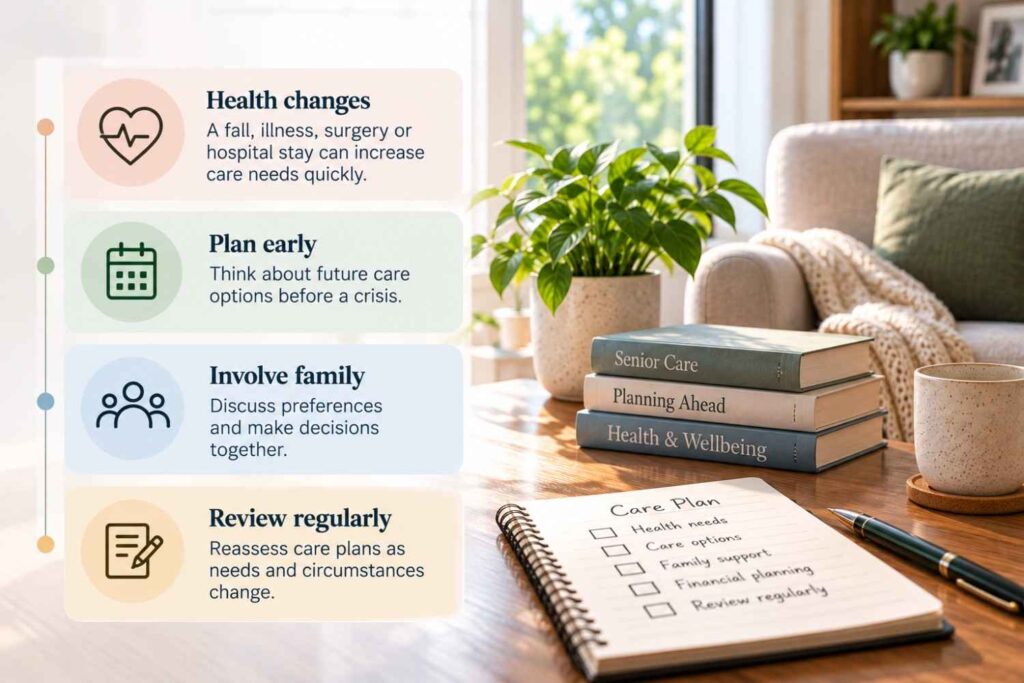
Planning Long-Term Senior Care for Changing Needs
Care needs can change surprisingly quickly. A fall, illness, surgery or hospital stay may mean that a senior suddenly needs much more help than before. It helps to think about this early rather than waiting for a crisis.
Reviewing Long-Term Care as Senior Needs Change
A senior who only needs occasional assistance now may need daily support later. The reverse can happen too. Someone recovering from an illness may gradually regain their independence.
For that reason, families should check the care arrangement from time to time. Is the senior still managing meals? Can they get around safely? Are they taking medication correctly? Do they need help at night?
A full time caregiver for elderly support may become necessary when a person starts needing help throughout most of the day. If their condition improves, the family can reassess the arrangement.
Finding Suitable Senior Care Services in Singapore
When comparing senior care in Singapore, do not look only at the number of hours provided. Find out what those hours actually cover.
CareHome Nursing provides home nursing, domestic caregiver services, caregiver training, equipment services and home-based medical support in Singapore.
Choosing the Right Long-Term Care for Elderly People
Home care, nursing visits, a full-time caregiver or residential care may each make sense in different situations. The right choice is the one that fits the person’s health, routine and level of independence without making daily life unnecessarily complicated.